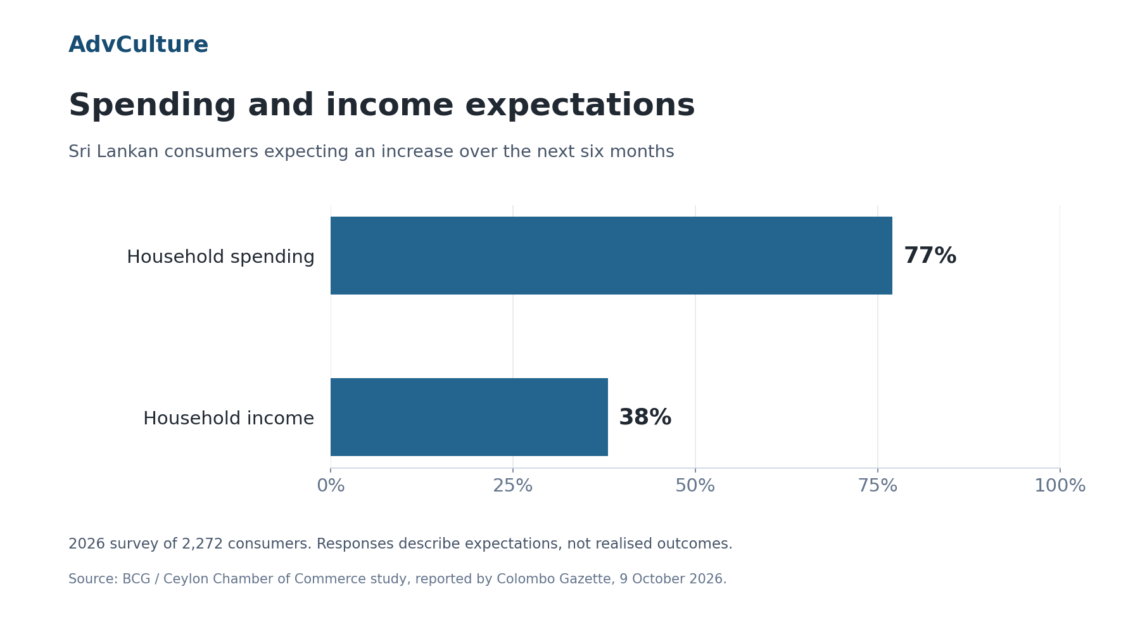
Most Sri Lankan consumers expect household spending to rise over the next six months, but far fewer anticipate an increase in income, according to a study by Boston Consulting Group (BCG) in collaboration with The Ceylon Chamber of Commerce.
The survey found that 77% expected spending to increase, compared with 38% who expected higher incomes. The findings describe respondents' expectations at the time of the survey, rather than actual changes in expenditure.
BCG's report, The Changing Path to Purchase in Sri Lanka, examines how households discover products, choose brands and complete purchases following a period of sustained economic pressure. Its survey covered 2,272 consumers across all nine provinces in June and July 2026.
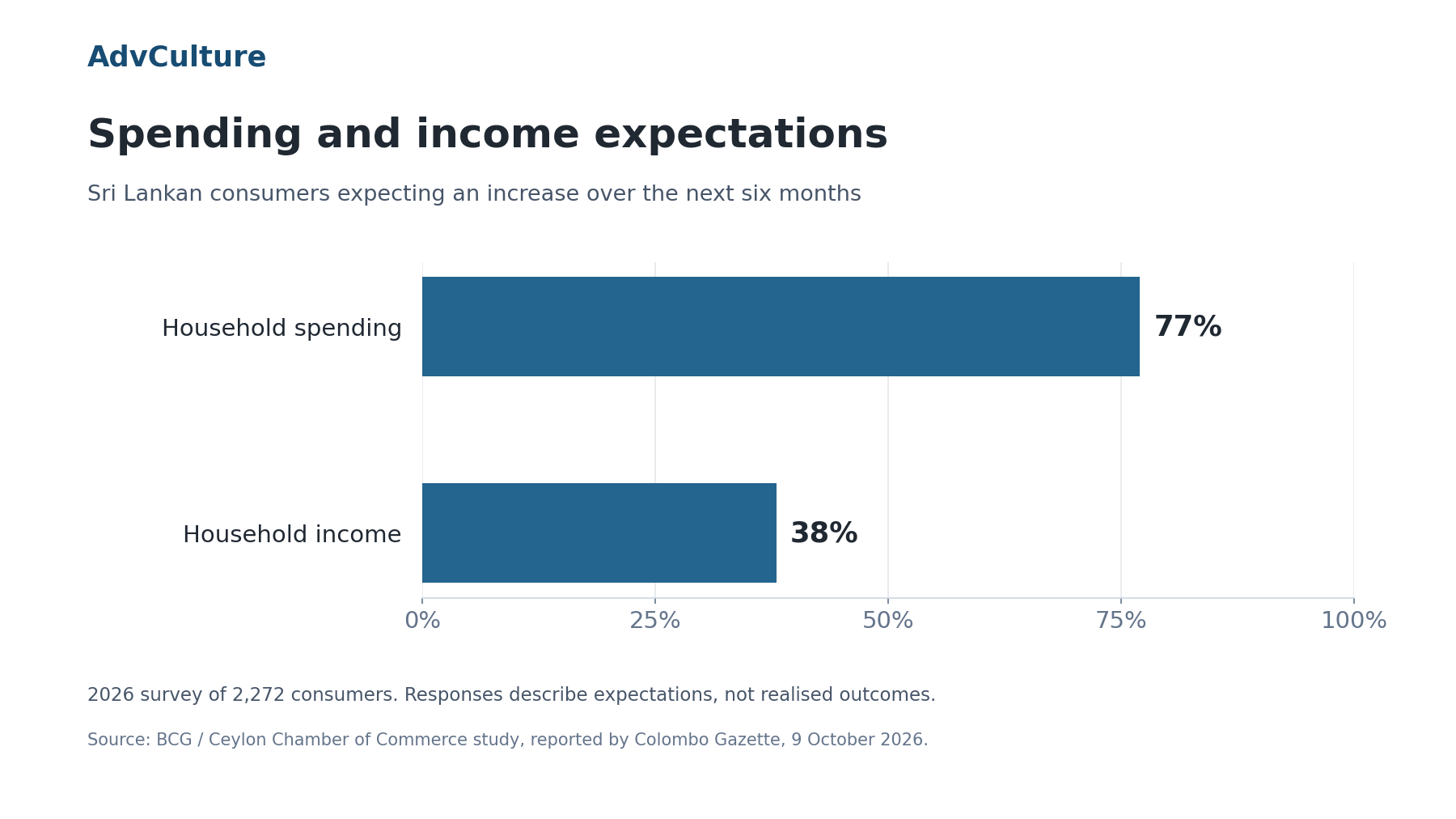
Spending and income expectations among surveyed consumers. Graphic: AdvCulture, based on BCG and Ceylon Chamber research reported by Colombo Gazette.
Digital channels gain influence
Word of mouth remained the leading purchase influence, with 66% of consumers naming it among their top three. Digital channels followed at 51%, up from 32% in BCG's 2020 study, according to Daily FT's reporting on the findings.
Television was cited by 37%, while newspapers and radio each stood at 7%. The figures measure reported purchase influence, not advertising expenditure or audience reach.
The study also found that 55% of consumers were aware of generative artificial intelligence and 18% used it. About one in three users turned to these tools to research brands and products, Colombo Gazette reported.
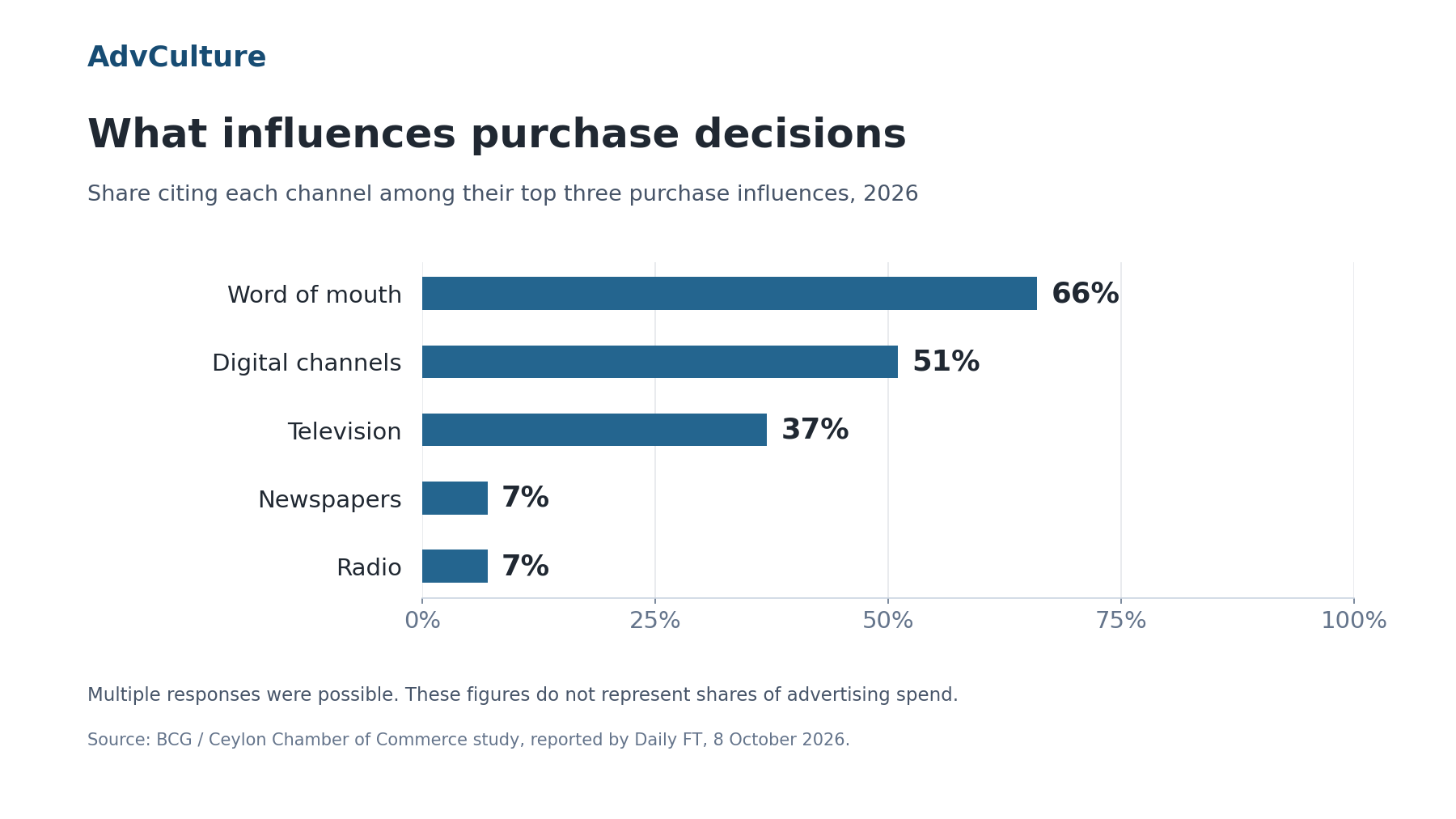
Respondents could identify more than one influence. Graphic: AdvCulture, based on BCG and Ceylon Chamber research reported by Daily FT.
Fewer shoppers favour a single brand
Preference for one specific brand declined across several categories compared with 2020. Among staples buyers, the share fell from 14% to 6%, while those considering two or three brands increased from 36% to 50%.
Single-brand preference also fell from 39% to 29% in personal care and from 22% to 17% in packaged food, Daily FT reported.
BCG said household consumption had recovered to a record level, but consumers were becoming more deliberate about purchases, with priorities differing by income and geography. The report examines the implications for businesses as digital discovery, brand preferences and transaction methods change.
Sources: